
“These autonomous publications used for staging, communication and the construction of collective identities…they meant self-empowerment, the overcoming of isolation and the constitution of a social and cultural community.”
Football fanzines writ large…except that quote is from a rather weighty academic paper about fanzines and a comparison of the genesis of punk in the FDR vs the GDR[1]. Look, what I do in my spare time is up to me OK?
We’ve explored the links between music and fanzines before in names and clearly lots of fanzine creators were big music fans but what more do we know about them and more importantly what motivated them?
Loud
Wouldn’t it be great if, rather than my cack-handed attempts at analysis, we had a proper survey from the peak era of fanzine releases, 1989. A survey about fanzines done by proper academics at a university?…Well step right on in because Loud, “The new national fanzine” issue 1 from 1989 carried just such a thing. I’ve seen this survey referred to in a few books and fanzines so to find the actual survey in this fanzine was an amazing stroke of luck. Yet another night of “refreshed” EBay bidding pays off.
We’ve discovered 184 “General” fanzines started over the years, not covering one club or country specifically. So far, the highest single year for starts with 16 was 1988 (with only 10 in the preceding 5 years but 33 coming along in the next 5 years!) Loud was part of a growing crowd.
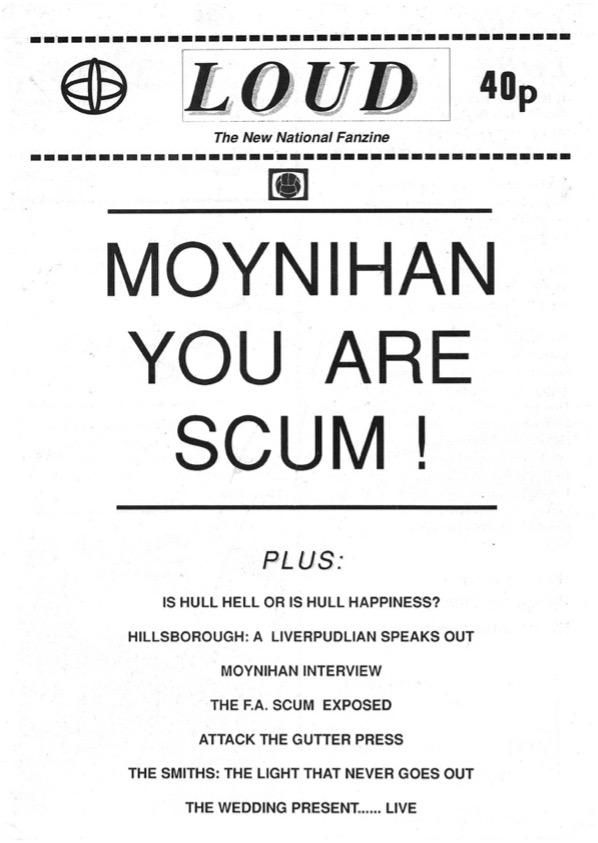
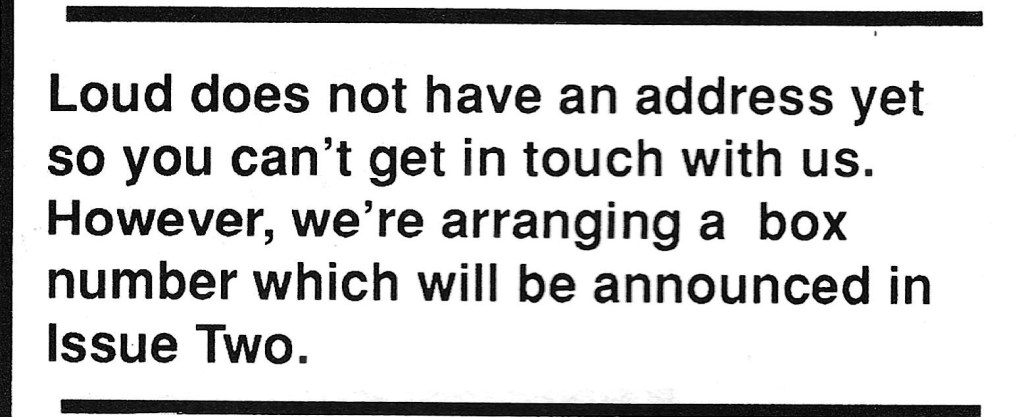
I don’t know that much about Loud, but I’m fairly sure they didn’t like Colin Moynihan. They were also classically organised like many fanzines early in their life, you couldn’t actually contact them as they had no address.
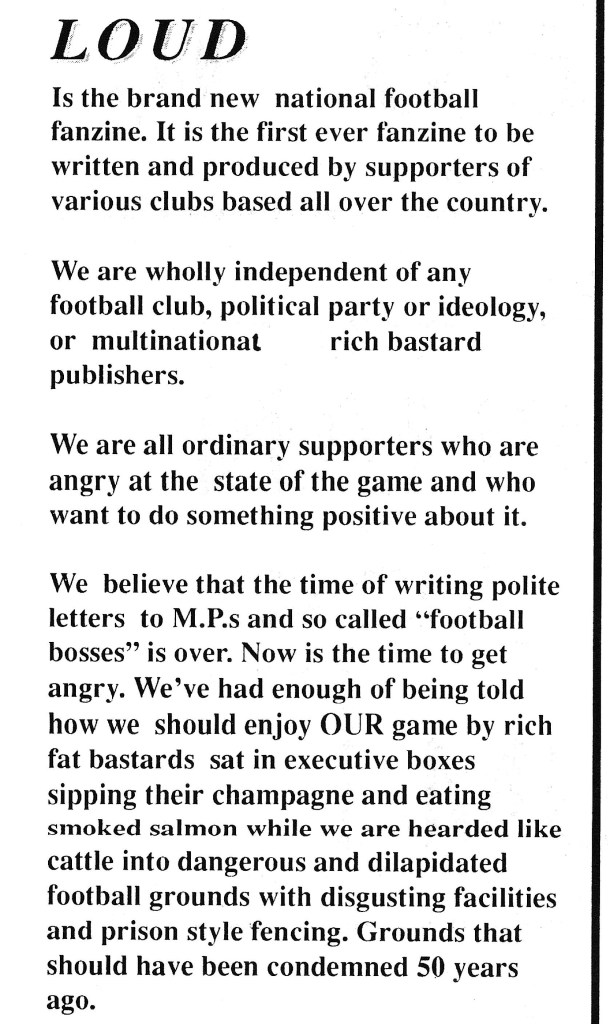
The fanzine was by “ordinary supporters angry at the state of the game” from across the country, many of who already had/contributed to their own club fanzines. It pitches its tent firmly on the Off The Ball/When Saturday Comes battleground of general fanzines but wants to get its point across in a different “angry’ way.
Loud is very strident in its opinions, as you can tell by the front cover and the fact that they attacked WSC for a cover about Hillsborough which I thought was actually quite well thought out, pointed and poignant.
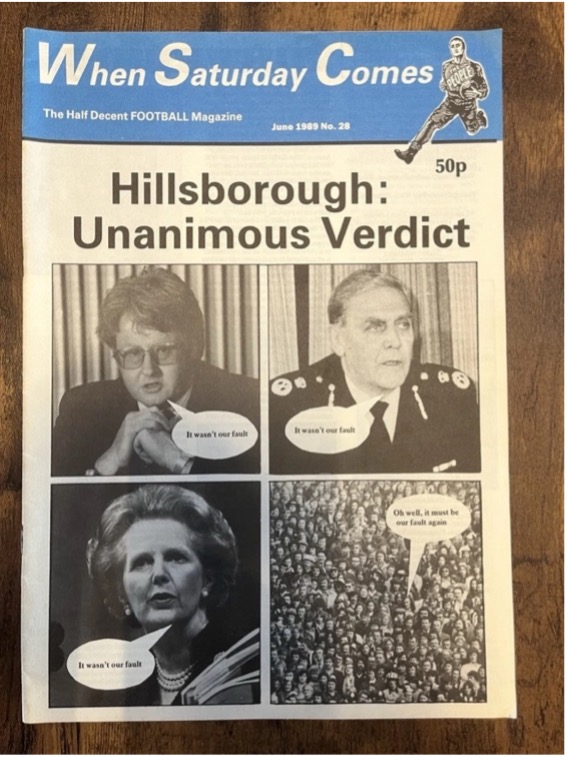
Articles about supporting Hull and Boston feature along with some average fanboy reviews of The Wedding Present and The Smiths “the preoccupation with sickness is an apt metaphor for the human condition” I mean come on!
As you would absolutely not expect, in the midst of this with barely a comment is a survey from the Sir Norman Chester Centre for Football Research, department of sociology at the university of Leicester. Catchy name eh. All now part of De Montfort University of course.
Sir Norman Chester was a very interesting character who served as Warden of Nuffield College at Oxford University from 1954 to 1978 and pursued academic research but was also a noted public servant who had a “great belief in the importance of academics mixing with the outside world” [2]
He loved football and was part of government enquiries into the game in 1966 and was chairman of the Football Grounds Improvement Trust and vice chair of the Football Trust which would distribute grants of well over £67m to football clubs for ground improvements.
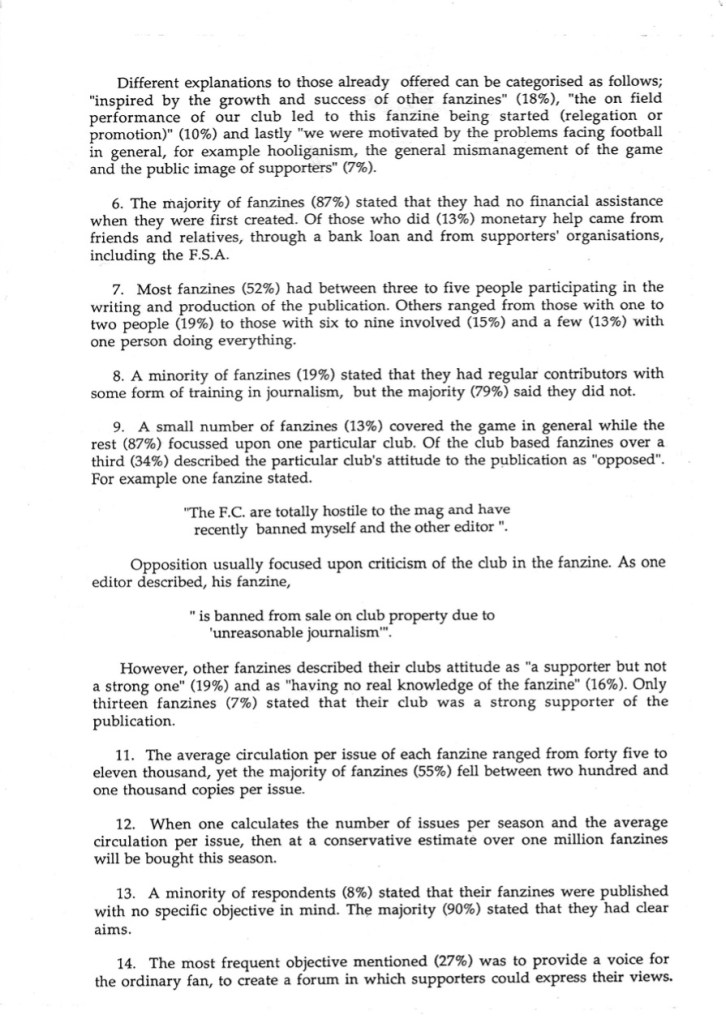
I’ll reproduce the survey here but it’s probably not a great read on a screen, so I’ll summarize.
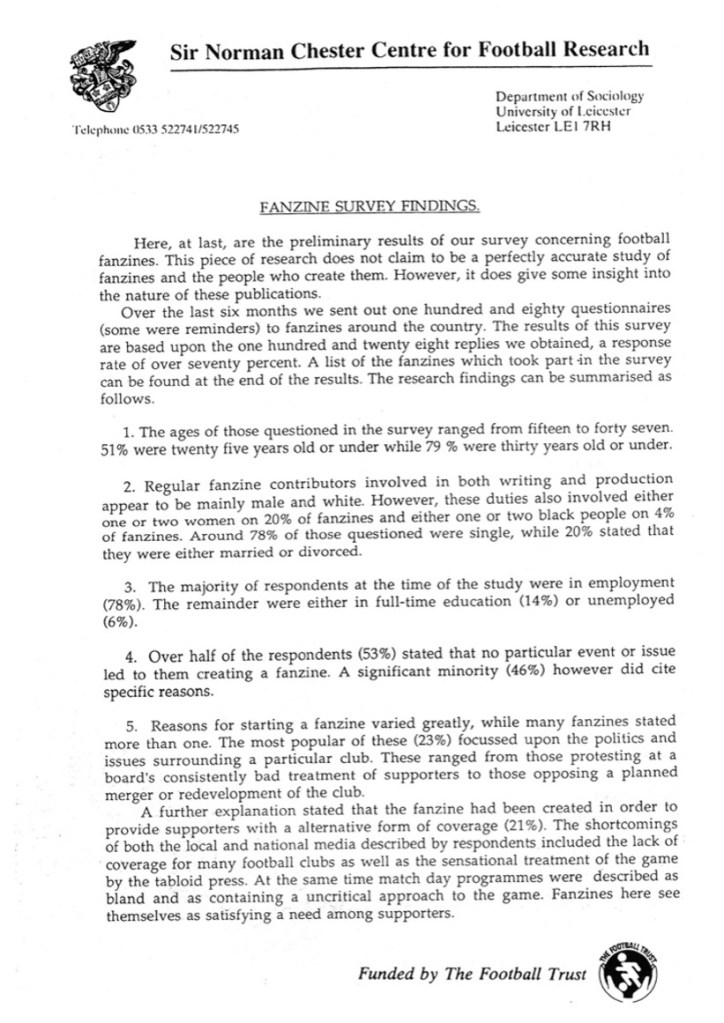
Though the research was published in 1989 it appears to have been collected BEFORE Hillsborough but obviously after Bradford and Heysel.
Who
- The survey covers 126 fanzines and estimates fanzine sales at over 1,000,000 over the season!
- 79% of respondents were younger than 30 and 78% of respondents were single.
- The majority of fanzines were self funding but in the 13% of cases that had external money, most came from “friends and relatives”
- 34% said clubs opposed them
- 90% of fanzines said they had clear aims
- 44% said club politics & providing a voice were a reason for starting
- 20% of zines had female contributors
- 4% were black
I’m not sure of their maths but one million sales from nearly 180 surveys means average sales per fanzine per season of 5,500. The majority in this survey state they sold between 45 and 1,000 per issue so this seems low but even so, remarkable numbers.
The percentage of respondents who were single and under 30 should be no surprise but the 78% single stat did make me chuckle (sorry, former editors) For context the percentage of people of married age who were married around the time was about 50%.
The numbers related to female and black contributors are fascinating. OK 20% of fanzines having females involved is low (for comparison about 45% of the workforce were women in 1989) but it is considerably higher than I expected with football fandom being such a male dominated “pursuit” in the 80s and anecdotal though it might be I can’t think that even 10% of football crowds were female at the time. Even today football struggles attracting balanced, ethnically diverse crowds to grounds and to work in the game but 4% of fanzines having black contributors is way above the percentage of black people in the population at the time (1.6%)
The survey suggests that football fanzines were way ahead of football in terms of representation in 1989. Perhaps this shouldn’t be surprising as fanzines were about eliminating not just stupid government initiatives but were against all forms of discrimination but its heartening to see how far ahead they were even if this is a limited survey sample.
Why
There was a lot of opposition from clubs and most fanzines stated they had clear aims which were as very much club related but influenced by broader issues such as hooliganism or ‘mismanagement of the game’.
This little glimpse is tantalising and I’d really like to dig further into this as I’m sure the individual answers would be more revealing. I guess a visit to the Sir Norman Chester archives is on the cards.
Fanzines were started for many reasons and Simon Wright (Groty Dick, Fingerpost and Talking Bull) made a point often overlooked “for clubs with significant exiled support, fanzines were important in pre internet days”. Simon also pointed out succinctly that fanzines came about because of “the need for a voice”. Rob Nicholls of Fly Me To The Moon supports this “we weren’t all hooligans, and we had plenty to say about our game.”
The story of protest in fanzines is well known and I’ve written about aspects of it before ( https://footballfanzineculture.blog/2025/08/21/protest-and-protest-culture-in-fanzines/ ) We’ll return to it many more times so instead today lets look at what fanzines meant to people.
What
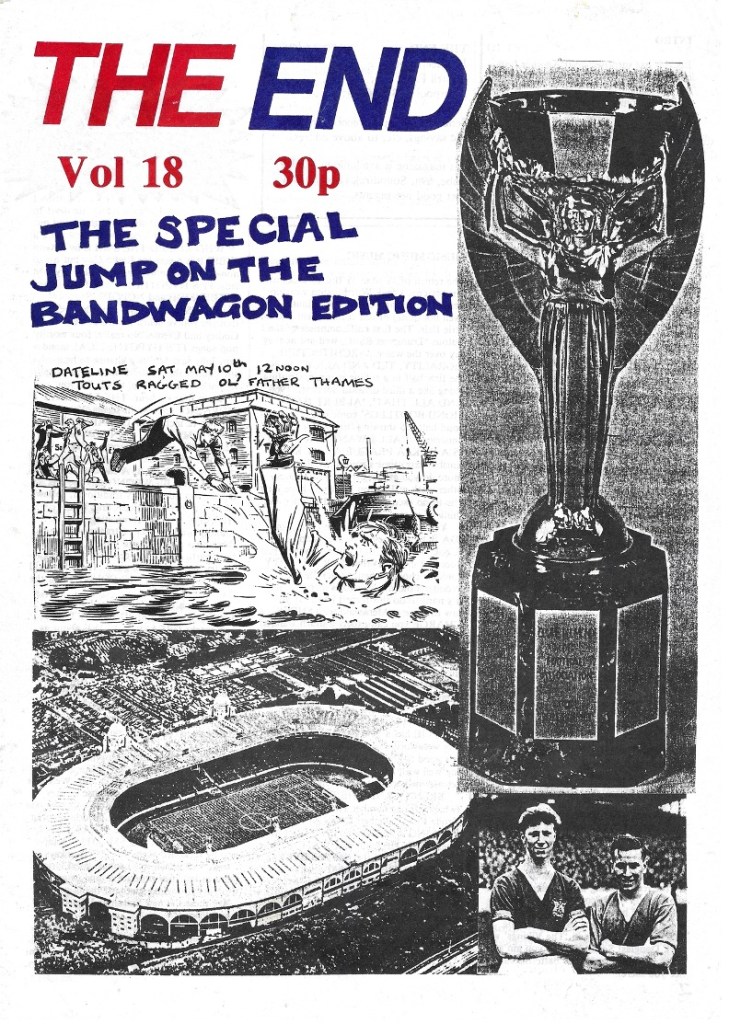
To look at what fanzines meant and were I think it’s only right to continue to listen to what former editors/contributors say and I’ll let their words tell the story. The End’s Mick Potter put it clearly, “a magazine like Loaded was a nineties nationwide equivalent of The End. Loaded wasn’t funny, The End was funny…we wanted to make it funny and it was a despondent time and we wanted to take the piss. We didn’t want to sit there and be miserable about it and if you’re going to focus on the trauma that was taking place let’s do it in a funny way. The poetry page was a platform for this.” He tells a tale about watching a Liverpool game standing on the Kop in the mid 80s. A fellow supporter shuffled up to him and inserted a piece of paper in his pocket with a word in his ear—“here’s a couple of poems, use them if you want to but don’t print my name.”
Also from the The End, Phil Jones said “the eighties for all the despondency and unemployment it was probably our best time. The despondency led to creativity”
Final Whistle
This 1989 study of fanzines tell us much about fanzines and there are a few surprises. It’s a relatively small subset but still an interesting dive into the genesis of football fanzines.
70% of fanzine producers might have been single but its worth stating again how progressive fanzines were; 20% of fanzines had female contributors, 4% of fanzine content producers were black, fanzines were progressive as well as protesting. This survey adds detail and gives us many more things to look out for as we continue to document this important part of our culture and history.
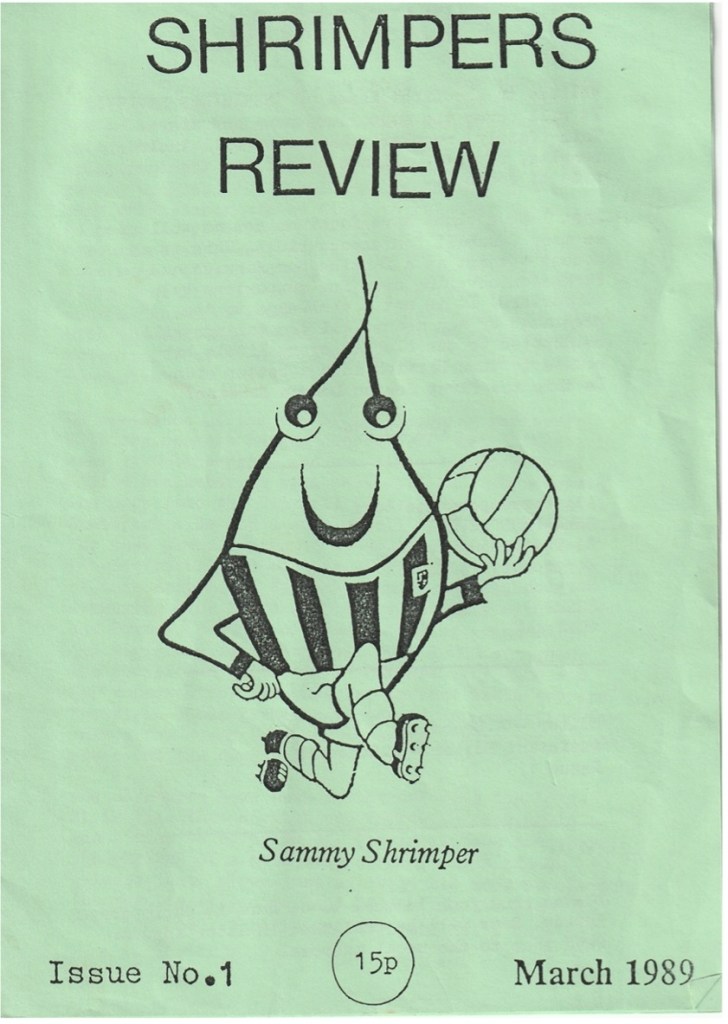
To summarize what football and fanzines did and do I’ll leave you more words from an editor, the words of Andy Schooler. You can find Andy at @SchoolerSport , now a freelance journalist he is also the youngest editor of a fanzine that we’ve found, just 13 at the time he edited Shrimpers Review, a beautiful fanzine looking at Harwich & Parkeston FC
“I think my dad was encouraging me as I’d shown an interest in writing. It very much shaped my life as had we not done this, I’m not sure it would have turned out as it did
By writing the fanzine, I came to the club’s attention and six months later, they needed someone to write the match reports for their programme and the local paper, they approached me to do it.
Doing that convinced me that journalism was something I wanted to pursue and I went on to become a professional, fully qualified journalist, mainly working in sport.
My dad, who initially started coming to the matches with me as something of a chaperone, soon got roped in too and has now been club secretary for the best part of 30 years!”
[1] https://journals.openedition.org/volume/636
[2] https://nuffieldcollegelibrary.wordpress.com/2014/06/10/from-the-archives-sir-norman-chester/

 Football Fanzine Culture
Leave a comment