

An interview with the CEO of Google appeared on the BBC this week, interesting only for the fact that one tech’ company is finally coming clean on what utter rot AI is when you are searching for facts or even vaguely clean information on many things. This has been clear to many people for a while, in particular the large community of people who research fanzines (1 – Ed)

Even in the early days of the project to compile The List of fanzines (now 1761 fanzines long and still growing) it became clear that Google or any search couldn’t be trusted blindly and that AI was, well let’s just say limited in its usefulness.
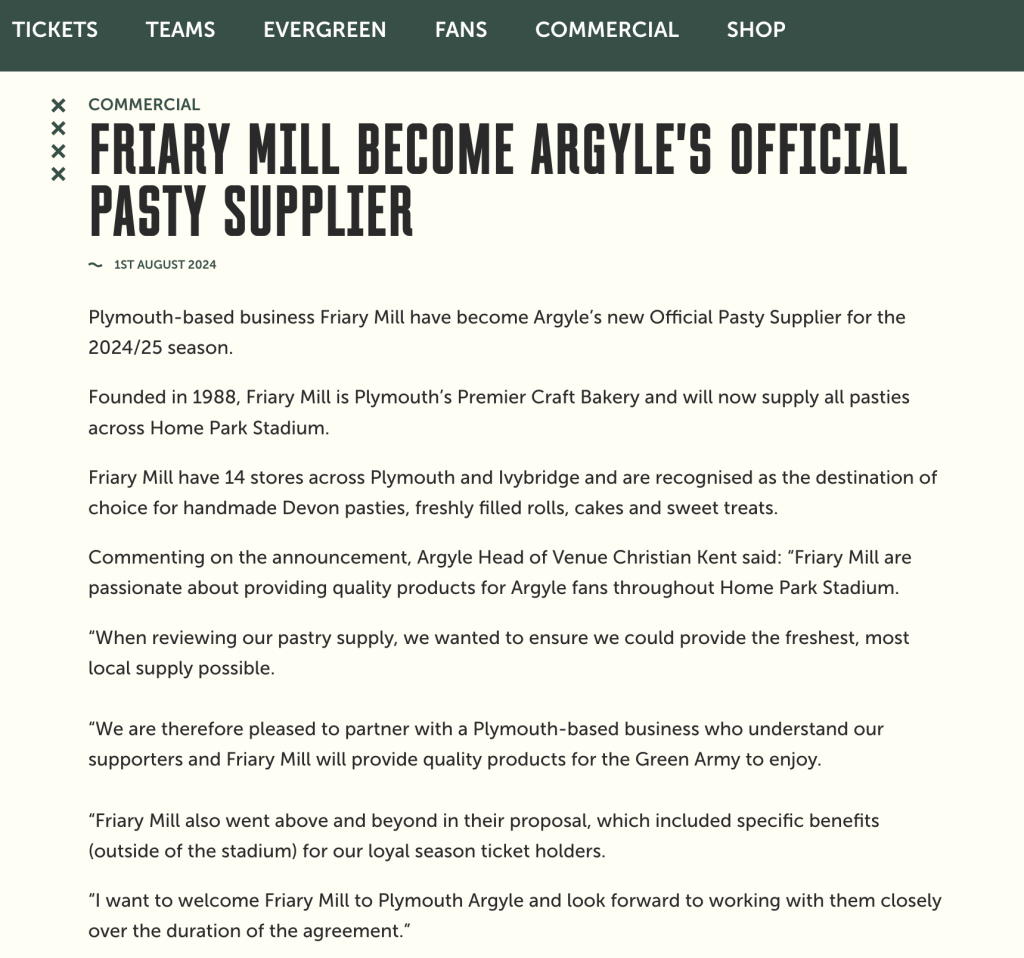
A long time ago there was a Plymouth fanzine called Pasty News which we believe was produced in Avon somewhere. As mentioned previously I went to Google hoping to find more. The result was interesting but just not what I was looking for and the AI overview for another Pilgrims ‘zine, Central Heating was infuriating.

So this week’s blog will look at a few examples showing why you shouldn’t just trust Hal and everything he says and more importantly what we’re missing as fanzine circulation has declined.
Getting Shirty
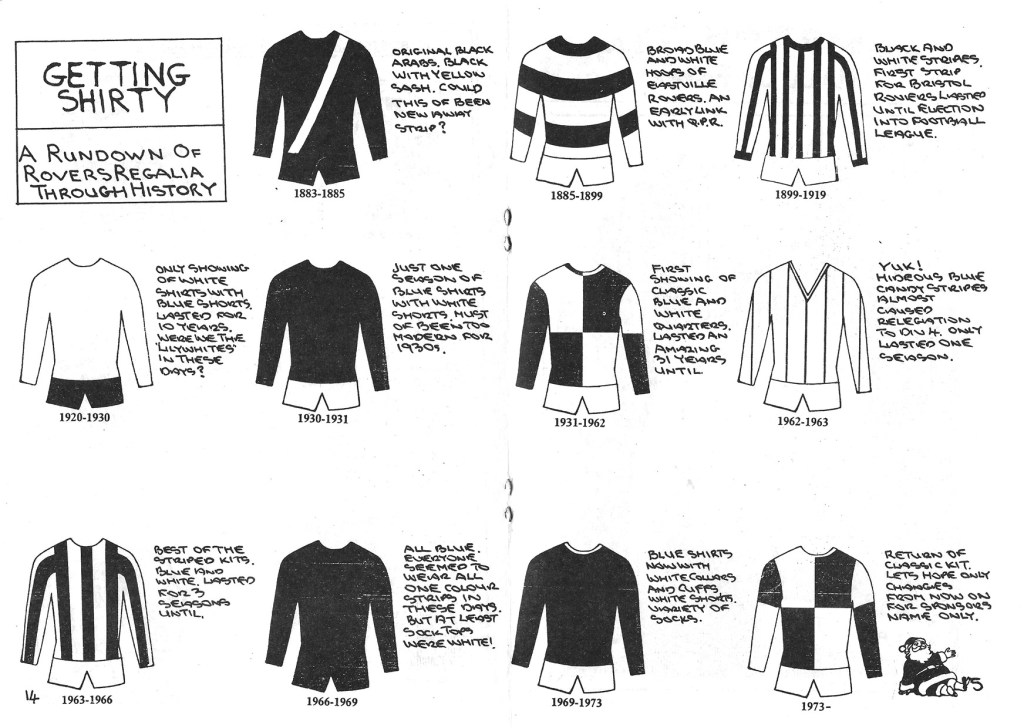
This week I discovered this nice little centrefold piece in the Bristol Rovers fanzine The Trumpton Times issue 1 in December 1992. Even in black and white it’s great, clear, concise and the handwritten notes next to the lovely, neat drawings (look at the collar on the 1931 to 1962 quarter kit!) just add to the quality and feel of something done with care, including Santa in the corner. Plus, they call kits regalia, I’m all for the use of words like regalia. Simple, concise and yet detailed, even the lack of colour isn’t a problem as your brain fills the colours in from the descriptions and your vague memories of Match of the Day.
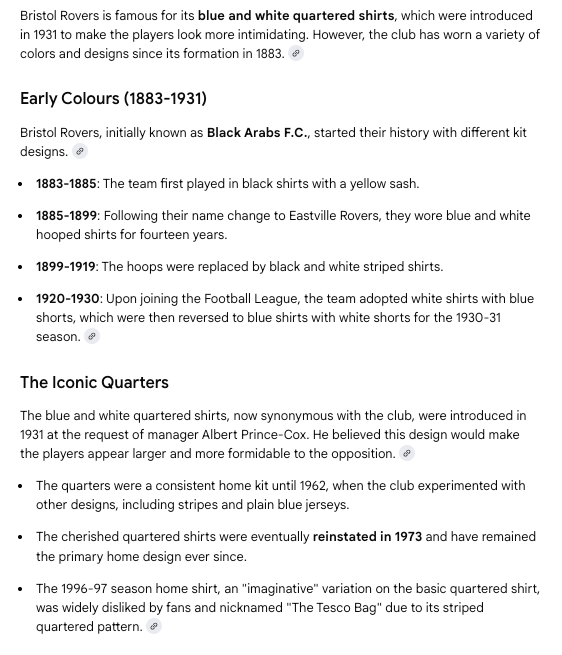
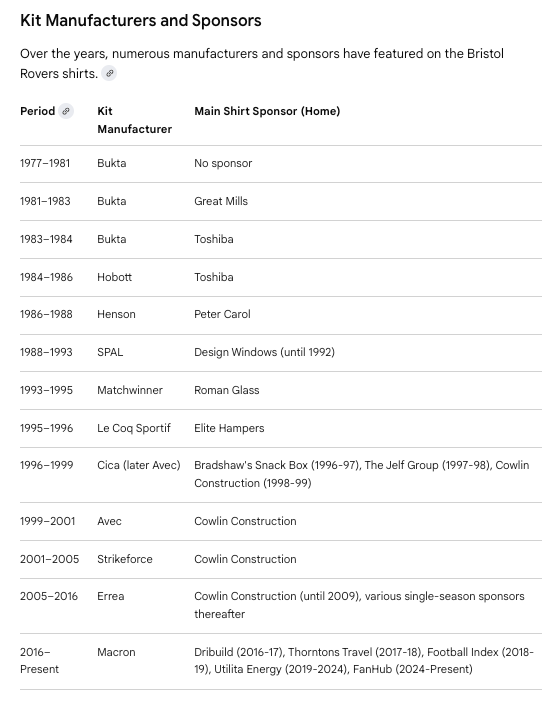
It’s great but isn’t this the sort of thing that the internet does better? Well, Google AI presents you with a list and adds a summary of key points before going into the minutiae of kits makers and sponsors. It’s OK I suppose but not really something lavished with care or very eye-catching.
In the sake of fairness, I thought maybe actual kit websites where people have done some research can do better? Historical Kits[1] always do an impressive job but disagree slightly on the details here and then cover the many and varied tiny changes prevalent nowadays which to be honest are only for the absolute obsessive. Football Kit Archive[2] won’t let me look at their history because I have an ad blocker so I didn’t look, I don’t need millions of ads when I’m looking at the history of Bristol Rovers kits (I do this more often than you’d think). Football Shirt History[3] only bothers to go back to 1966..
I’ll call this a draw
Ghosts of the League
Fanzines weren’t all just jokes and rants, in most fanzines you would find thoughtful pieces even if they were very local and focussed on the team the fanzine supported. There were also many great little pieces like this, also From The Trumpton Times issue 1.
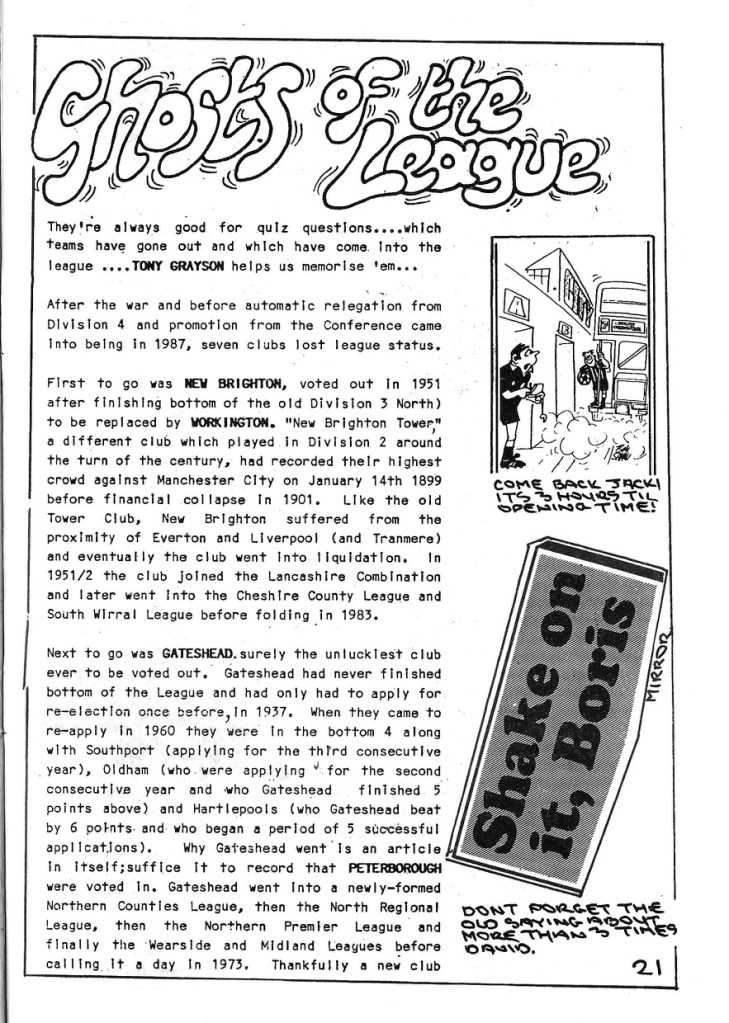
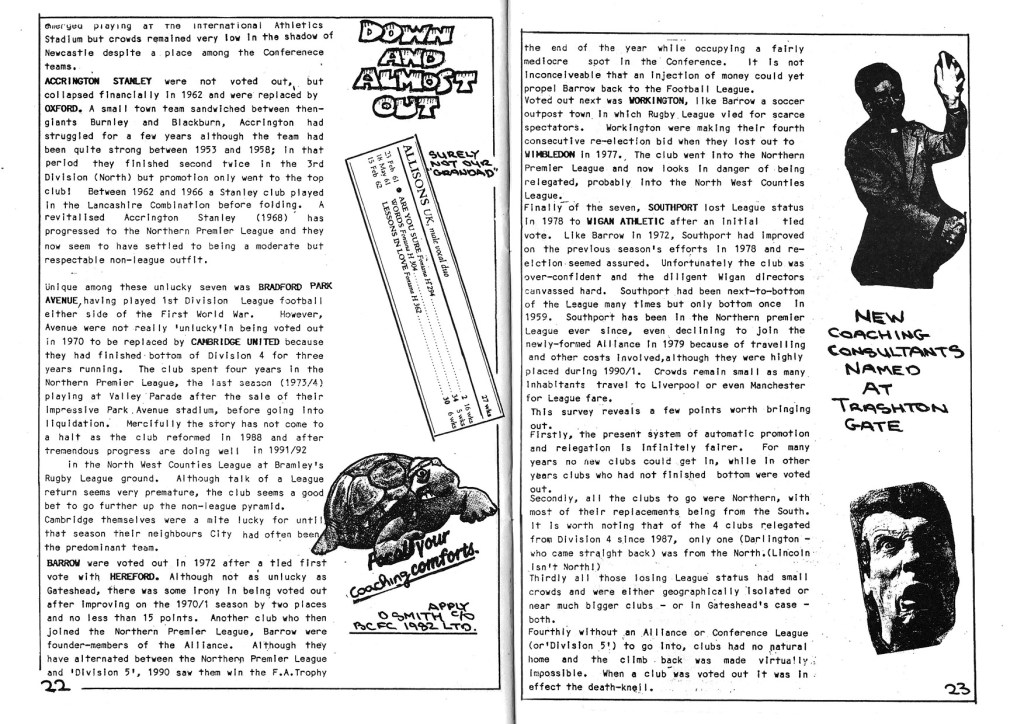
The author has clearly taken some time to research this and goes on to not just list the clubs but also their replacements and what happened to the relegated clubs, all of this before the internet.
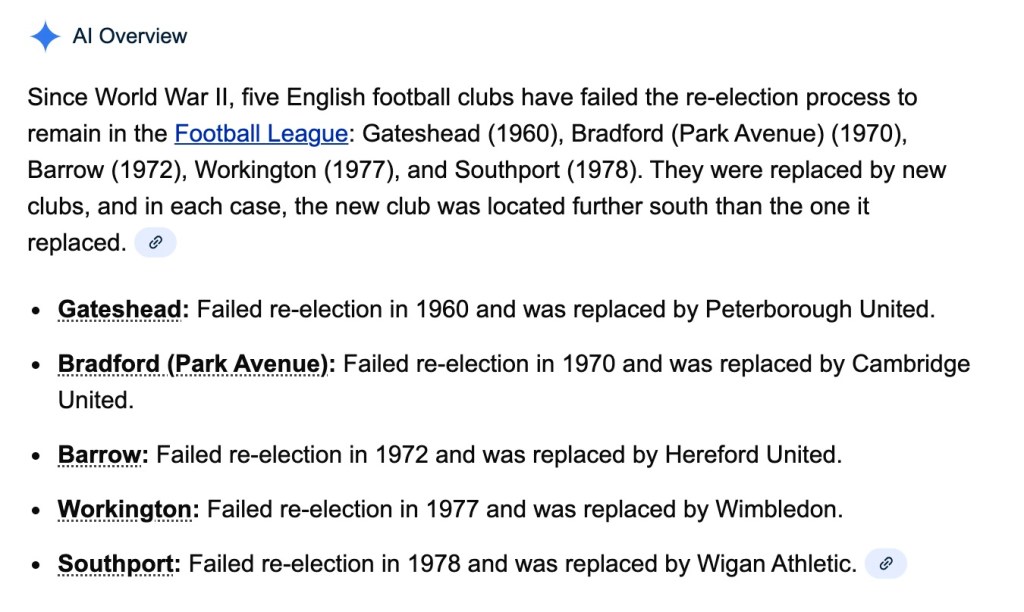
Compare this to the AI result of a search for clubs not re-elected in English football post World war 2. It is just plain wrong, it mentions 5 when there were 7 (OK Stanley folded anyway but they still had to officially be replaced ) AI can’t even get the basics right here but worse still is that it’s vague and just a list scraped from a few websites before it couldn’t be bothered to go on.
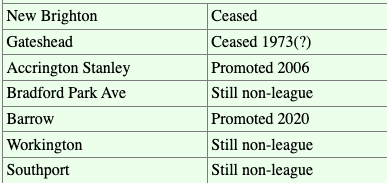
There is also surprisingly little in further google searches giving a succinct summary of the clubs lost to re-election. There wiki[4] is good but it’s not easy to extract detailed info from this. There’s one weighty tome from De Montfort university[5] that is VERY comprehensive, probably too comprehensive plus some reddit/forum entries (AVOID AVOID AVOID!!!) but that’s about it There was a non secure site listing ALL of the teams that were re-elected in a table that would have looked great in a fanzine but lacks the production values we’ve come to expect today but in any case it disappeared from the web….
Haggis Supper
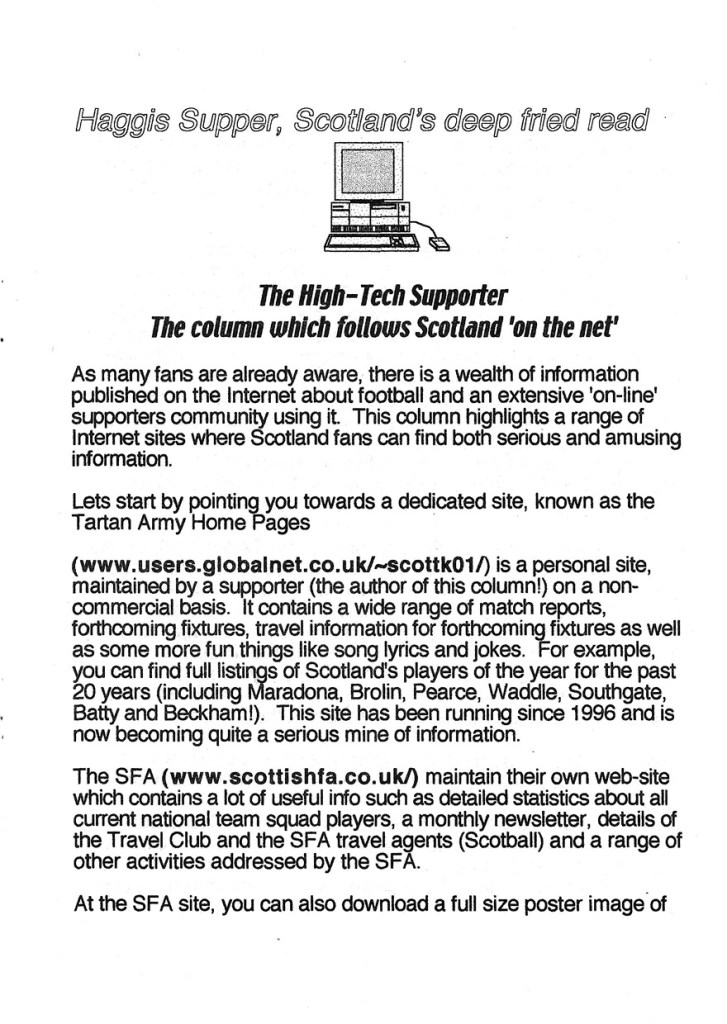
As fanzines struggled with the rise of Cyberdyne systems and Skynet they began to list websites that were useful or in the spirit of fanzines. Issue 1 of Haggis Supper, a fanzine supporting the Scottish national side carried 3 pages listing some fantastic sounding websites.
I mean who wouldn’t like to look at a site dedicated to Brazilian soccer hunks and John Collins or have a desktop of the 1998 Scotland world cup squad with Neil Sullivan’s head on Andy Goram’s body, especially this week. Except for the Scottish FA site, now a dull corporate mouthpiece, all of them have disappeared. So much for the permanence if the web, you can’t help wishing some of this had been recorded in print form.

Serendipity
This week I had a conversation about fanzines with the extremely talented Sid Strong-Brett. (Thanks to @leytonorientear for putting us in touch) Sid (on Instagram @Sidstong7) is studying at the University of the Arts in London and has been producing fanzines as part of that. His work is quite beautiful and evocative.
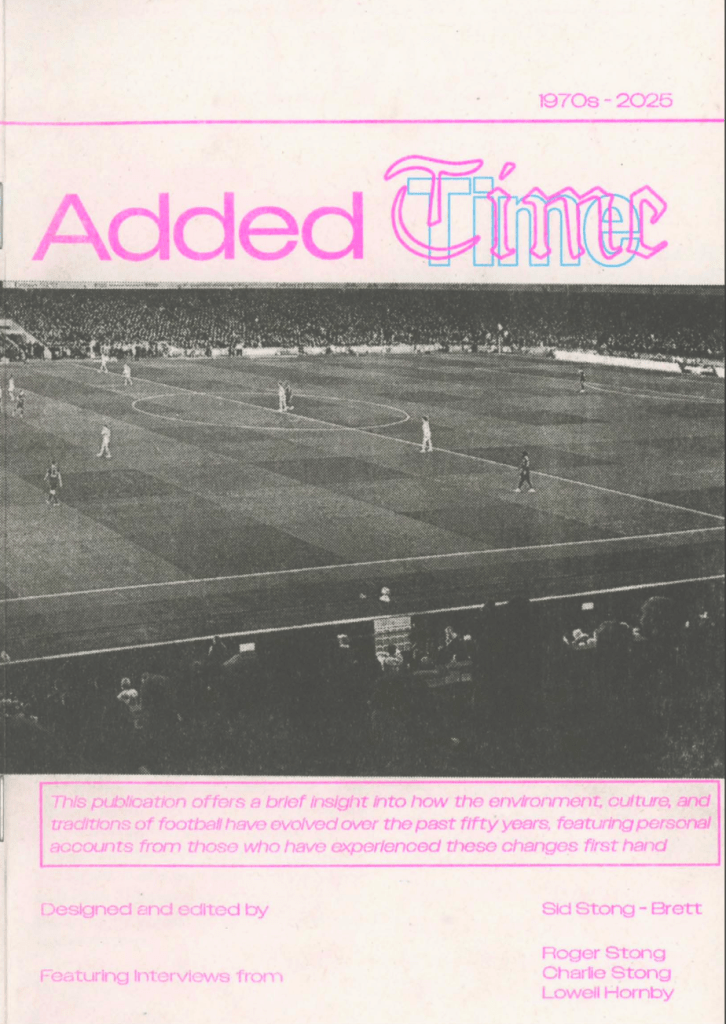
For an upcoming task he wanted to discuss what effect the demise of print fanzines had on fandom and below is a summary of my thoughts based on our conversation.
- Protest is much less effective: You could argue that this would happen anyway with remote corporate ownership, but local focussed action is always stronger than broad, national initiatives. Managed messaging by big corporations just rolls over everything without push back from ground level.
- Preservation: Print lasts, a copy of all fanzines should have been preserved in the British Library by law. OK they weren’t, but they are still out there 50 years on and will last for hundreds of years if looked after. Websites disappear if you don’t pay the page provider money and the fantastic internet archive work being undertaken will forever be missing a HUGE number of websites from the early days of the web.
- Creativity has morphed: A big feature of fanzines was well researched history, 700 words of well thought out satire, statistics that took time to compile plus cartoons. This is still there online, but it is far less prevalent and drowned by the sheer volume of guff put out.
- Fact checking: Slower print sources tend to be more considered for a variety of reasons, legal and human nature. Social media and internet forums are much more reactionary, hot-headed responses de rigeur allowing trolls to create flashpoints. Repeating crap ad infinitum and strangling thoughts and arguments that don’t fit a certain narrative, they swamp more reasoned arguments in favour of an agenda forced on people using sheer volume. They also frequently only have a passing acquaintance with facts.
- A valuable source of social history has been lost: Of all the businesses listed on ad’ page in the 1992 QPR fanzine In The Loft, only the White Horse and the Janet Adegoke leisure centre (now just a pool) remain, all the others are lost except on the pages of the fanzine. The Libertines released a track called the General Smuts about the pub and it’s now an Egyptian restaurant, the Mail coach inn dated from 1823 but was demolished and that’s about all the internet reveals. For a local historian this is invaluable stuff to see what leisure meant in 1990s Shepherds bush
This is a huge loss.

Don’t get me wrong, creativity online and on social media can still be exceptional. Scotland’s improbable, impossible, incredible 4-2 win over Denmark was marked not just with an unbridled sense of pride and joy but some superb tributes as well but these are short sharp bursts, here today, gone tomorrow.
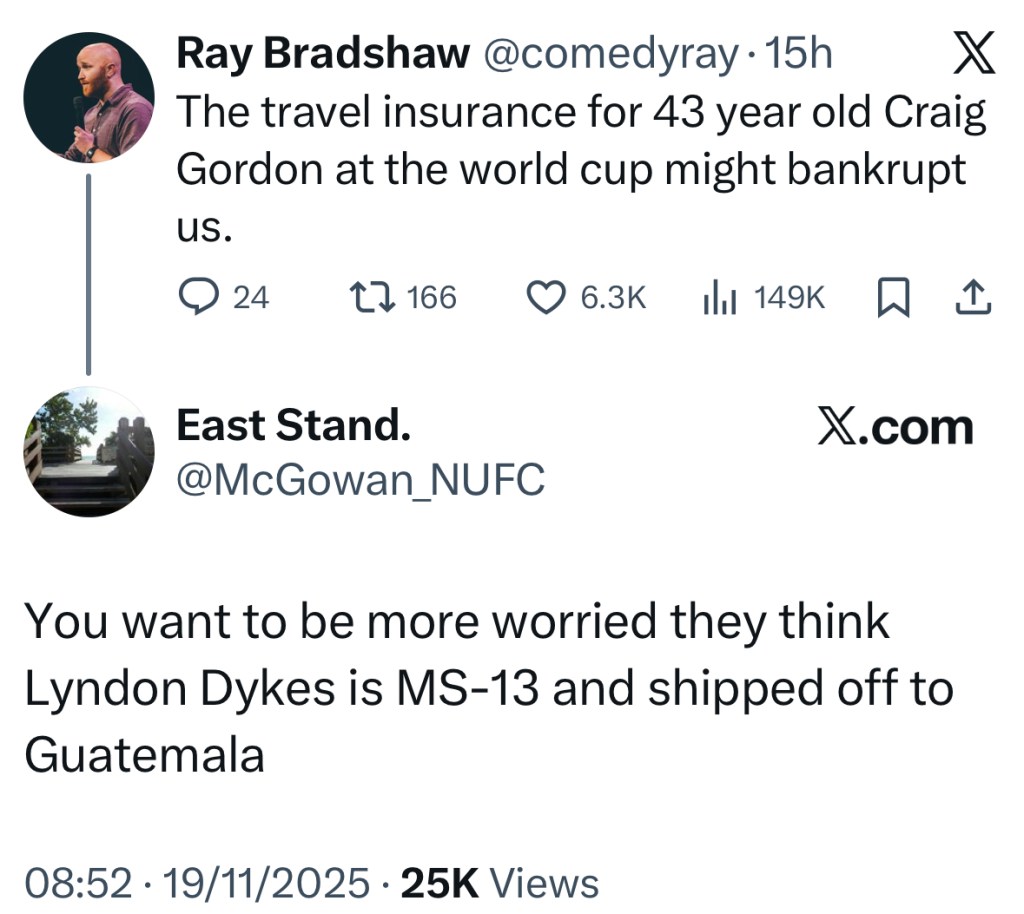


As a counterpoint, this xG account on twitter posted this garbage during the game. Why is that important? They have 538,000 followers on twitter alone, the other three I highlighted here for creativity…80,000 between them with one having 58,000. We’re floating in a sea of detritus, and I will be ranting about xG in a blog near you soon.


The Final Whistle
Look, I’m not a luddite and realise that the internet is brilliant for many things (blogs about football fanzines for example -Ed) but what I am saying is that in losing the bulk of print fanzines we literally lost some aspects of creativity and severely weakened fandom in a number of areas, the nature of protest and holding people to account for one. Put simply, putting your name and address on a letter or your views in print makes you think a bit harder about what you’re saying. The anonymity of the internet acts in exactly the opposite way.
Obviously we’d have had to wait a week or month for a fanzine to cover all this but it would have put all of this in a neat compact package for us to enjoy at our own pace, a 2 page summary about John McGinn and Kenny McLean’s time together at St Mirren including stats would be a lovely thing to read and keep as a nice little poorly printed record for years to come. God, I feel old!
[1] https://www.historicalkits.co.uk/Bristol_Rovers/Bristol_Rovers.htm
[2] https://www.footballkitarchive.com/bristol-rovers-kits/
[3] https://footballshirthistory.weebly.com/a-b/bristol-rovers#
[4] https://en.wikipedia.org/wiki/Re-election_(Football_League)#:~:text=However%2C%20several%20clubs%20more%20familiar,but%20were%20successful%20every%20time.

 Football Fanzine Culture
Leave a comment