

Jim Ratcliffe, a tax dodger living in Monaco who doesn’t speak the language, is the latest in a long line of people in high profile roles who have outed themselves in the most horrific manner with their utter, hateful bile. (small note Jimbo, “sorry that my choice of language has offended some people” is not an apology.)
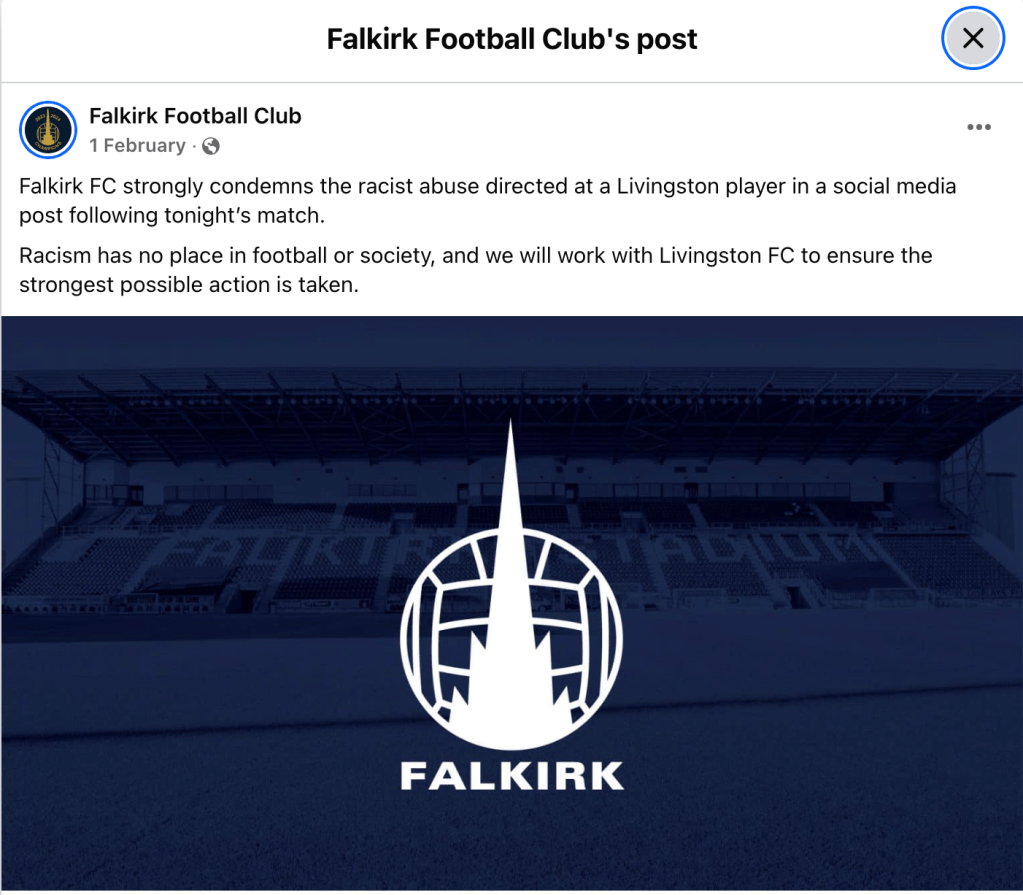
The actions and words of slack jawed people like this send a signal for others, Kick it out reported that in the 2024/25 season they received 1,398 reports, the highest number ever received by the anti-discrimination and inclusion charity in a single season.[1] According to a recent Ipsos poll over half of adults see racism as a problem in football in the UK.[2] In February last year a Falkirk supporter was issued with a stadium ban after spouting racist abuse at a Livingstone player on social media after a game[3]
It’s depressing to see these stories surface though it is good that these issues are being covered clearly and honestly in some parts of the mainstream press. Just a few short decades ago this wasn’t happening at all, with racist attitudes a widespread problem in all parts of society.
Looking back at fanzines now it is really clear just how big a role they played in changing attitudes. Racism persists but at least it is met with forceful criticism and even punishment meted out on organisations or individuals. With that in mind let’s look back at just a few examples of the type of things fanzines did to fight racism.
History repeats
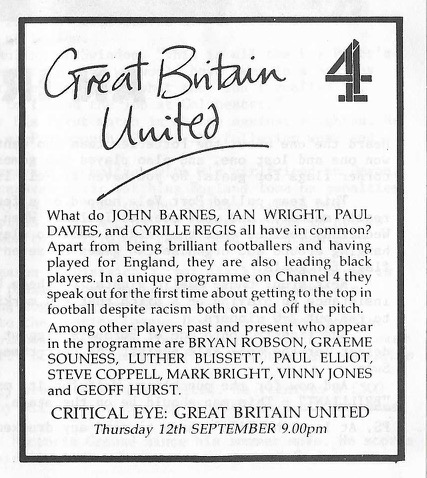
Unfortunately, this isn’t the first time a club owner has tried the “I’m not racist, but …” move. Though Ron Noades is not a name people under the age of 50 will remember a lot of football fans do for some shocking comments made to a Channel 4 documentary team in 1991 when in his role as Chairman of Crystal Palace. Ironically, the documentary was called “Great Britain United”
Cuddly Ron said some truly appalling things, to give you some idea, amongst the milder things he said was: “The black players at this club lend the side a lot of skill and flair, but you also need white players in there to balance things up and give the team some brains and some common sense”. Noades then attempted to defend his comments by stating that he could not be racist because he had six black players in his first team…
All of this from the mouth of the CHAIRMAN of a first division football club. Fanzine reaction and revulsion was far and wide but perhaps the best came from Barnsley fanzine South Riding issue 12 in September 1991. There were a couple of great pieces, one deadly serious, one employing the brilliant sarcastic humour that fanzines specialised in.
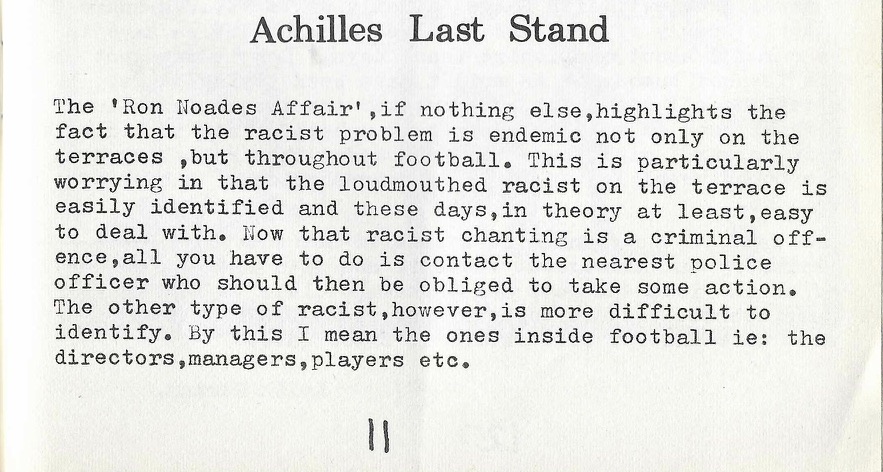
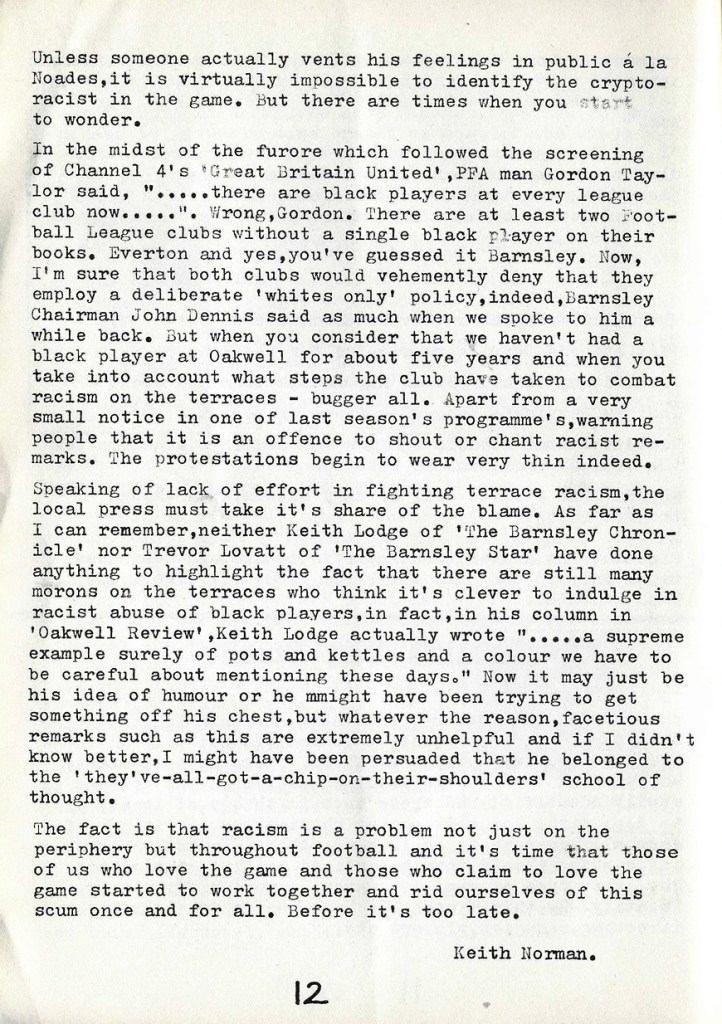
Keith Norman wrote an exceptional piece not just deriding the comments by Noades but pointing out that closer to home attitudes were “hidden” behind platitudes and paltry efforts inside grounds. Gordon Taylor, a man not known for his energetic pursuit of the truth comes in for deserved criticism for one of his usual platitudes and Barnsley themselves are also rightly criticised.
This is followed up elsewhere in the fanzine with a spoof dialogue from the boardroom demonstrating the ways attitudes were “hidden” at the time.
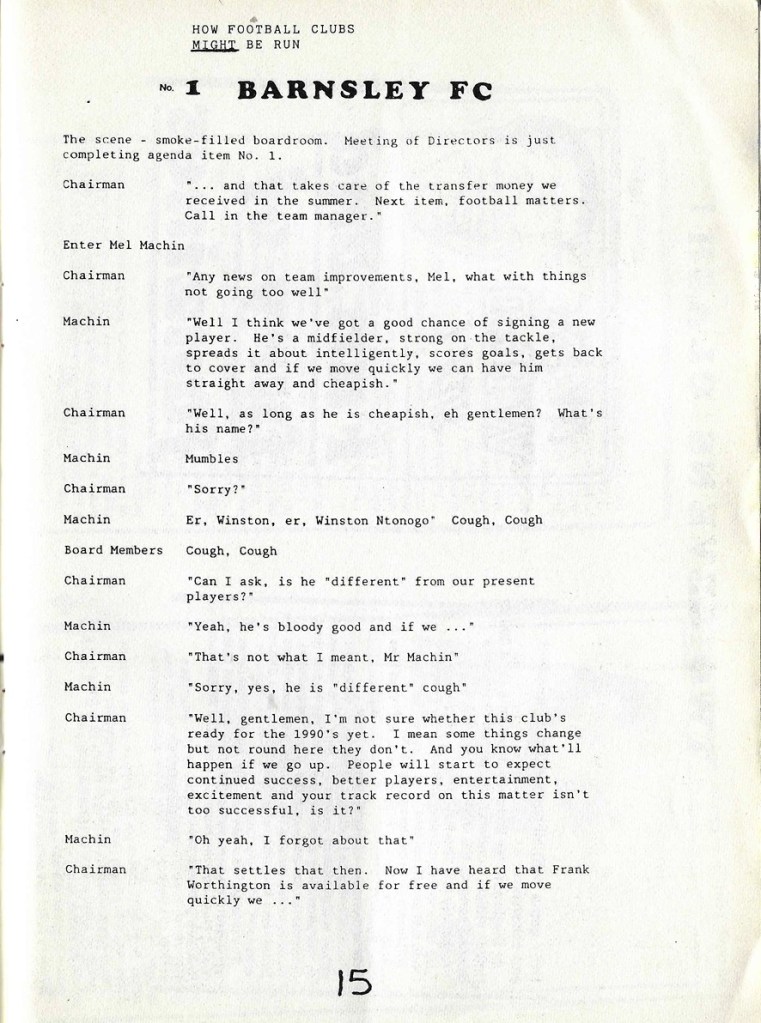
Passionate sarcasm and mockery, the bywords of fanzines.
Hartlepool, chips and racism
At the time of the rapid growth of fanzines the logistics of football supporting and grounds themselves could be daunting. Crumbling stadiums, underinvestment and appalling attitudes about customer service were the norm and many fans had had enough Fanzines were beginning to be used to voice complaints using sarcastic humour, travel tips and reviews.
An almost perfect example of this is a letter which appeared in Chesterfield fanzine The Crooked Spireite in September 1990. Written by editor Stuart Basson it perfectly demonstrates the humour and protest that we saw in fanzines, covering not just the appalling state of stadiums and the shocking catering ‘options’ so common at the time but also absolutely nails the disgraceful acceptance of racism by large parts of football and society in general. I’m pretty sure he didn’t receive a reply.
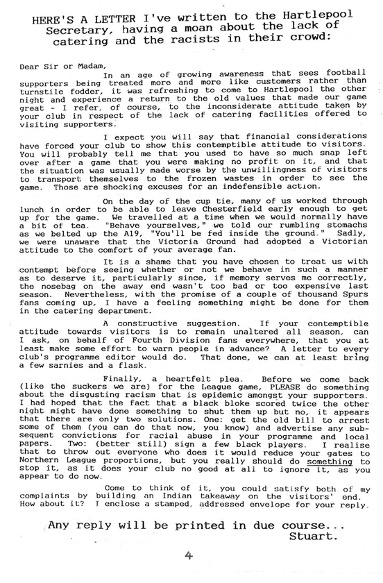
Don’t Back down
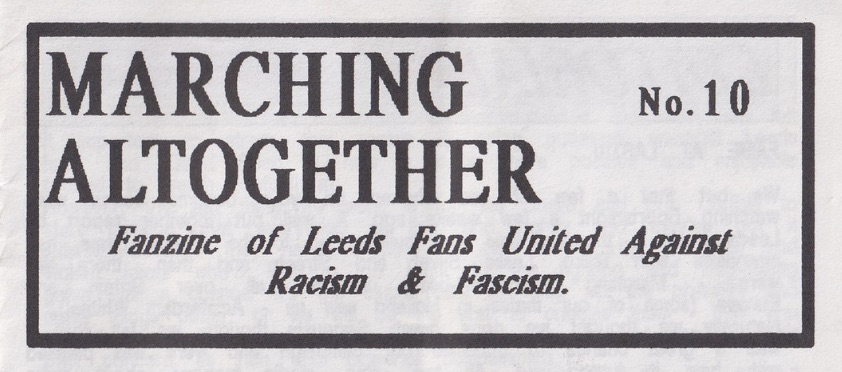
We’ll talk about Marching Altogether, a crucial Leeds fanzine at length in another blog, before that you can see most editions of the fanzine on this great flickr account https://www.flickr.com/photos/202272334@N02/albums/with/72177720324936238
The fanzine didn’t flinch in its coverage of the National Front racists outside Elland road, running a photo of them on the cover of issue 3, challenging them with peaceful protest outside the ground, plus running sarcastic articles and cartoon features.
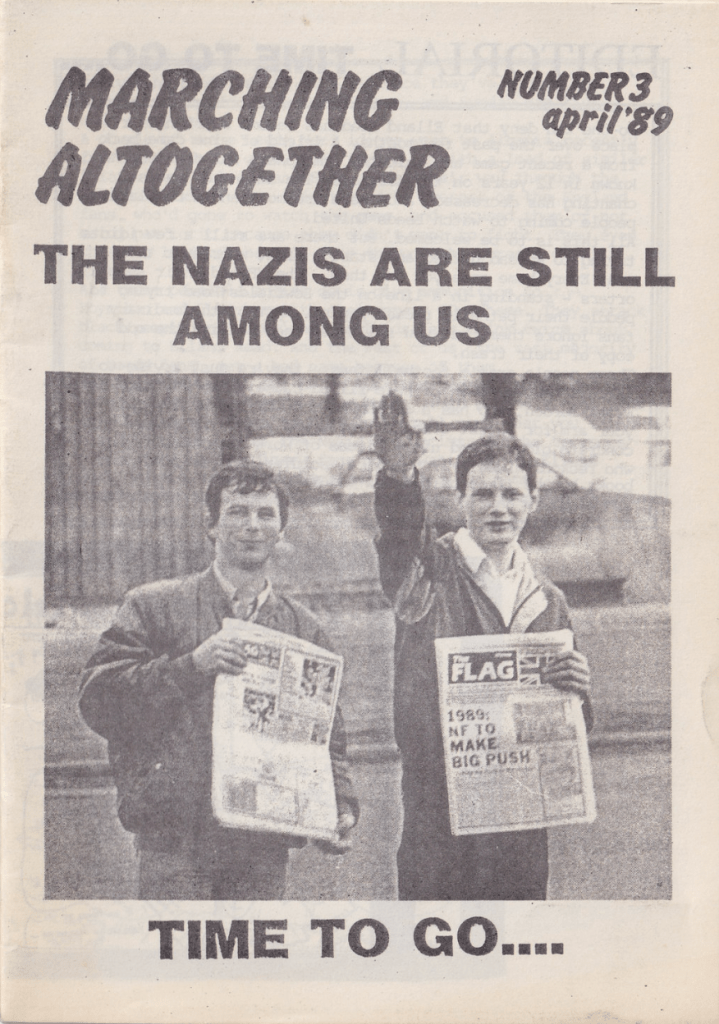
The cartoons were straightforward and hard hitting as well as the covers, suggesting that even the hooligan element of Leeds’ fan base were opposed to the racists who were visiting football grounds at the time selling their vile propaganda.
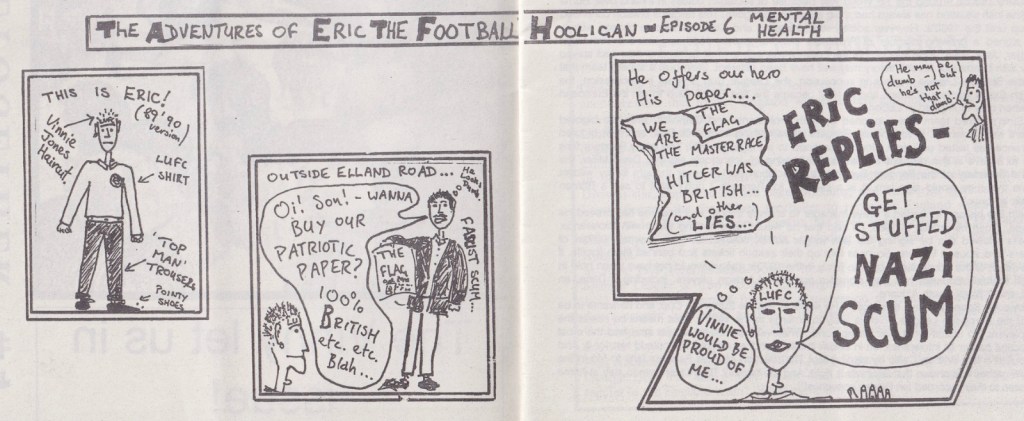
More about the story of this brilliant publication can be heard in this series of interviews commissioned for the Voice of the Fan exhibition. https://www.youtube.com/watch?v=gwZiUSVX71o
A Disease
Chelsea were a club plagued by many issues in the late 80s, The Chelsea Independent fanzine was set up to fight a proposed merger with QPR and Fulham but was also very prominent in the fight against racism.
This extraordinary article appeared in 1988 in issue number 6. Remember this is abuse directed at a Chelsea player by their own fans the author is talking about. Absolutely horrifying to read, fanzines played a leading role in publicly questioning behaviour that had gone largely unchecked at grounds until then.
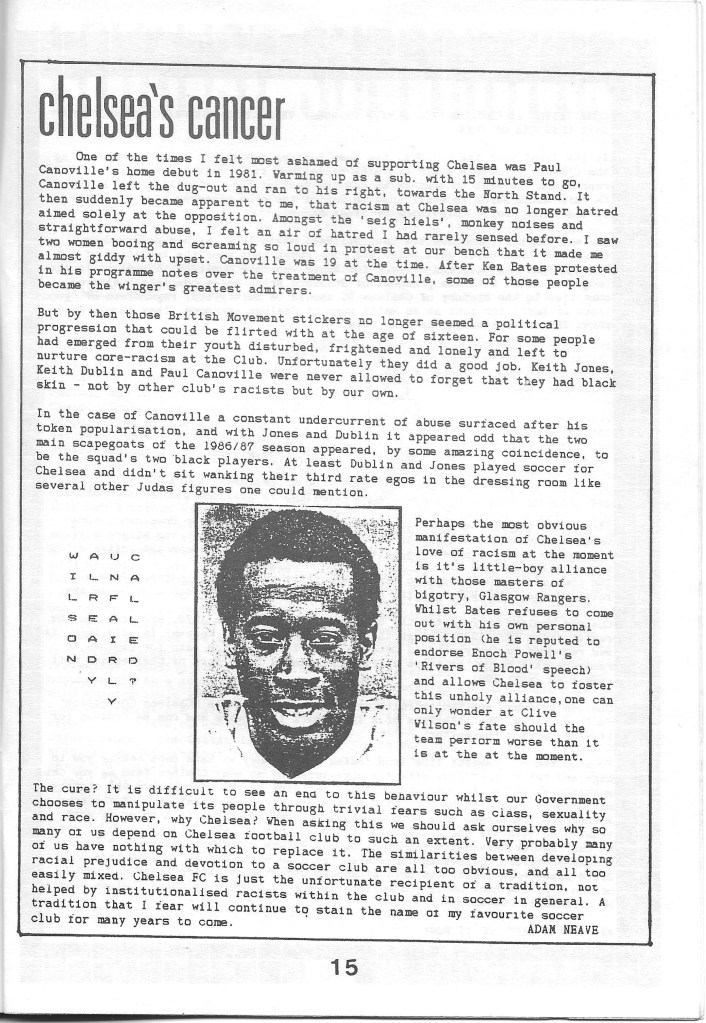
The sentence about politicians manipulating “people though trivial fears such as class, sexuality and race” would sadly still be appropriate today, when will we learn?
Power to the People
Humour and rage were both used as instruments of protest, and so was poetry. In October 2014 a fanzine with a TV reference appeared, a football special issue of an “Old Skool arty-farty free poetry fanzine” Power to the People. The choice of title was tongue in cheek, stolen from Wolfie, more associated with Dulwich’s arch-rivals home Tooting and Mitcham. All the pieces were protest themed against some form of discrimination or gentrification in modern football with racism obviously in the front of minds.
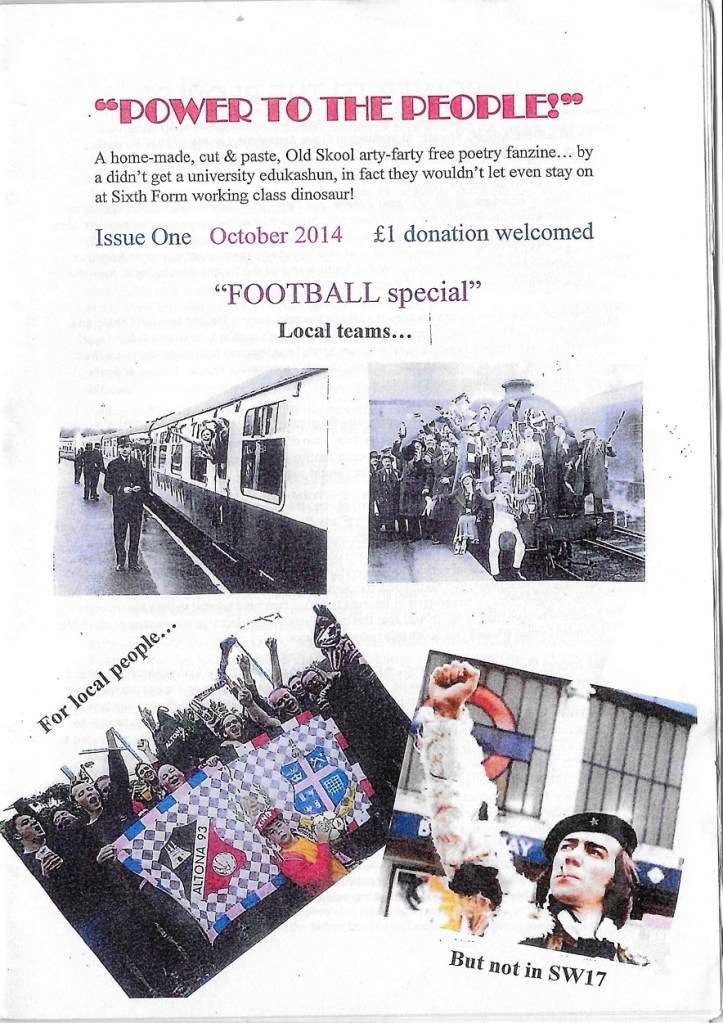
It was created by Mishi Morath who was also behind the brilliant Dulwich fanzine Champion Hill Street Blues, one of only a few we have traced with a TV show in the name, The Trumpton Times from Bristol rovers and Redan Hill 90210 at Aldershot being the others.
The piece “Selling your Soul” raises a question still relevant today as sports washing continues to shape the future of football in this country. The piece questions fans loyalty to a club even when the club appoints an out and out supporter of fascism as coach.
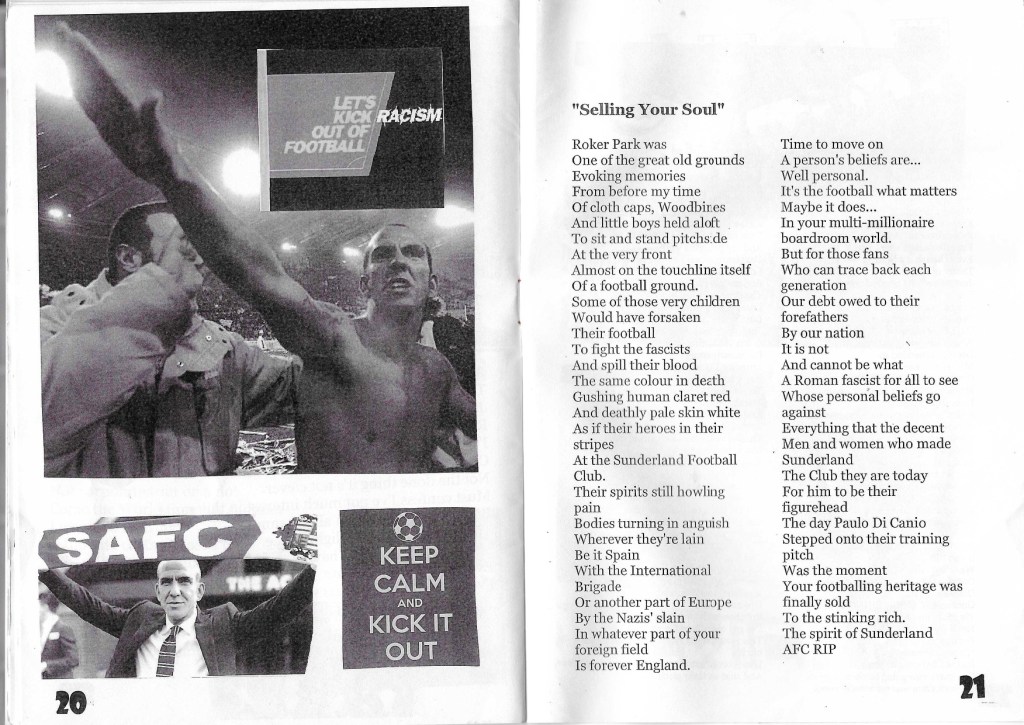
There was reaction in Sunderland at the time, club vice-chairman David Miliband resigned over Di Canio’s “past political statements” and the Durham Miner Association removed its mining banner from Sunderland’s Stadium of Light (built on the former site of Monkwearmouth colliery) expressing their anger over the appointment. Di Canio was removed after six months because of a revolt by the players, not the fans.
The Final Whistle
These are just a few examples of the passionate, sarcastic and mocking words fanzines frequently employed. They DID improve attitudes in and around football grounds and vastly reduced the number of goons willing to mouth their inane nonsense. It’s now clear that this was never going to be enough to completely remove this sickness, a societal malaise played on an made “acceptable” again by bigots prominent in political parties in this country.
The Kick it Out campaign continues its great work but is concerned at the rise in racist incidents from historically low levels. It would be all to easy to blame the inane ramblings of populist politicians and social media for this rise in racist incidents so that’s exactly what I’m going to do because there is a direct correlation. People see public figures being racist and they think that they can use anonymity on social media or in a crowd to parrot it.
We need to learn the lessons of history, fortunately there are many more laws, organisations and mechanisms than fanzines to help nowadays. If you see or hear racism at a football ground or indeed anywhere push back and push back hard.
[1] https://www.kickitout.org/reporting-statistics
[2] https://www.ipsos.com/en-uk/over-half-uk-adults-view-racism-football-problem
[3] https://www.falkirkfc.co.uk/2025/02/07/supporter-update-racist-abuse/?fbclid=IwY2xjawJQ3kNleHRuA2FlbQIxMAABHcWAH1wZJ26JcsGRz9Ahq9c0qJ1qnxwqMp68rRQHHFpJu9-thbaVrwv5Og_aem_9D6V0SHHdxg-TUPasxX1cg

 Football Fanzine Culture
Leave a comment