
This edition of “Editor” is a bit different as I’ve not actually been in touch with the editor, it’s just fallen in my lap so to speak. I recently bought a copy of issue 50 of superlative Cambridge United fanzine The Abbey Rabbit (TAR). Coinciding with their 10th anniversary it contained a celebratory interview with Nigel Pearce, the original editor and one of the co-founders of the fanzine.
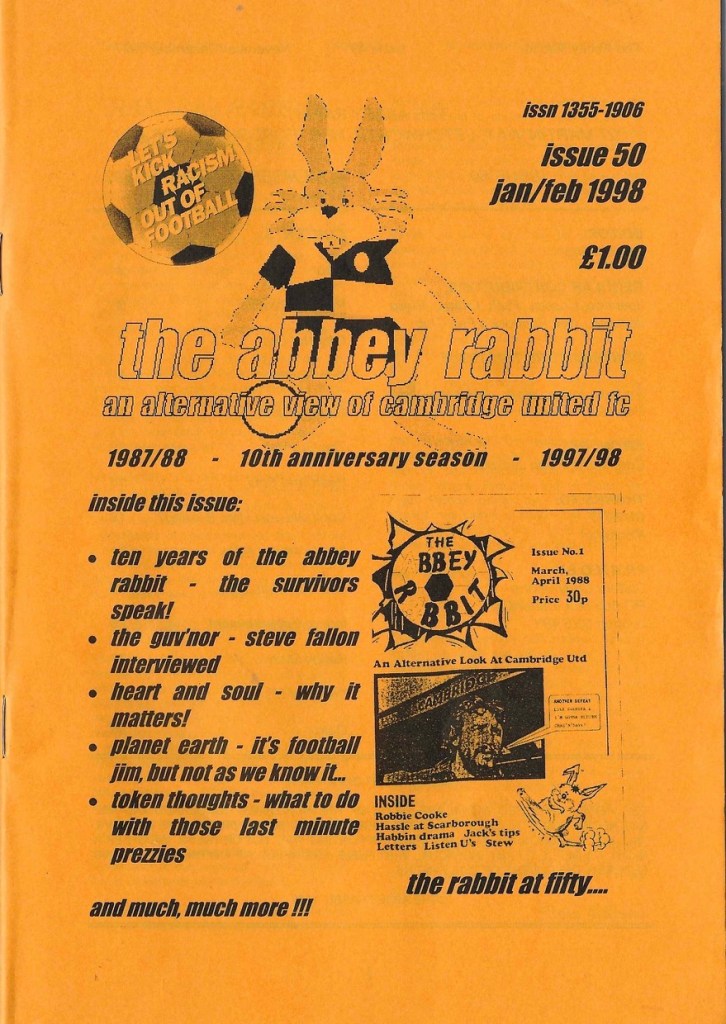
I thought this would make an interesting contrast with the interviews I have been doing 30 years later, written as it was in late 1997, a decade or so after the zine started and because when I ran though it I saw some interesting similarities with other fanzines experiences then and now.
Protagonists, Ideas and background
The story of why the fanzine sprang into life is a familiar one, terrible communication from the club, a dreadful few years and a bleak outlook. Welcome to football in the 80’s.
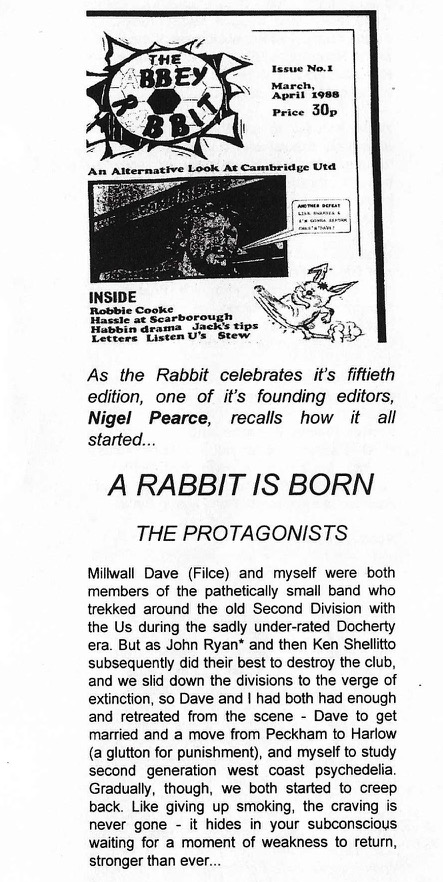
Nigel explains that he and Dave Filce decided they’d had enough and were inspired by When Saturday Comes (WSC) to put ink to paper to show people that not all fans were hooligans as Thatcher and her boot boys would have you believe.
They also mention another common driver, terrace humour and the wish to document it. A really important part of this project is to make sure that is curated and preserved properly, fanzines have always been full of fun and creative humour.
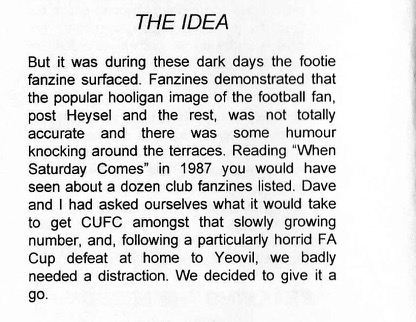
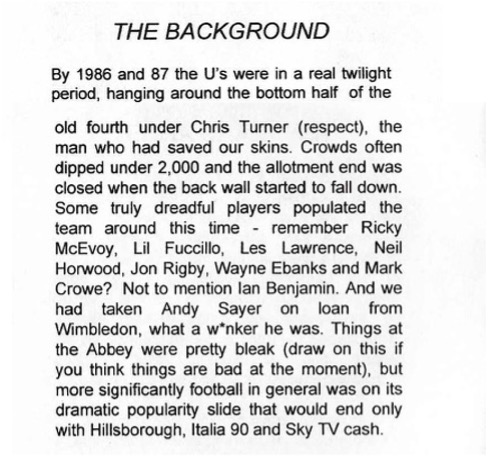
It’s also an interesting point they make about Hillsborough, Italia 90 and Sky TV cash ending football’s “popularity slide”. This is obviously true in general but with respect to fanzines, though the 3 years 1989-1991 saw 729 fanzines start in the UK there were already about 235 in existence before Hillsborough, the tsunami had already started.
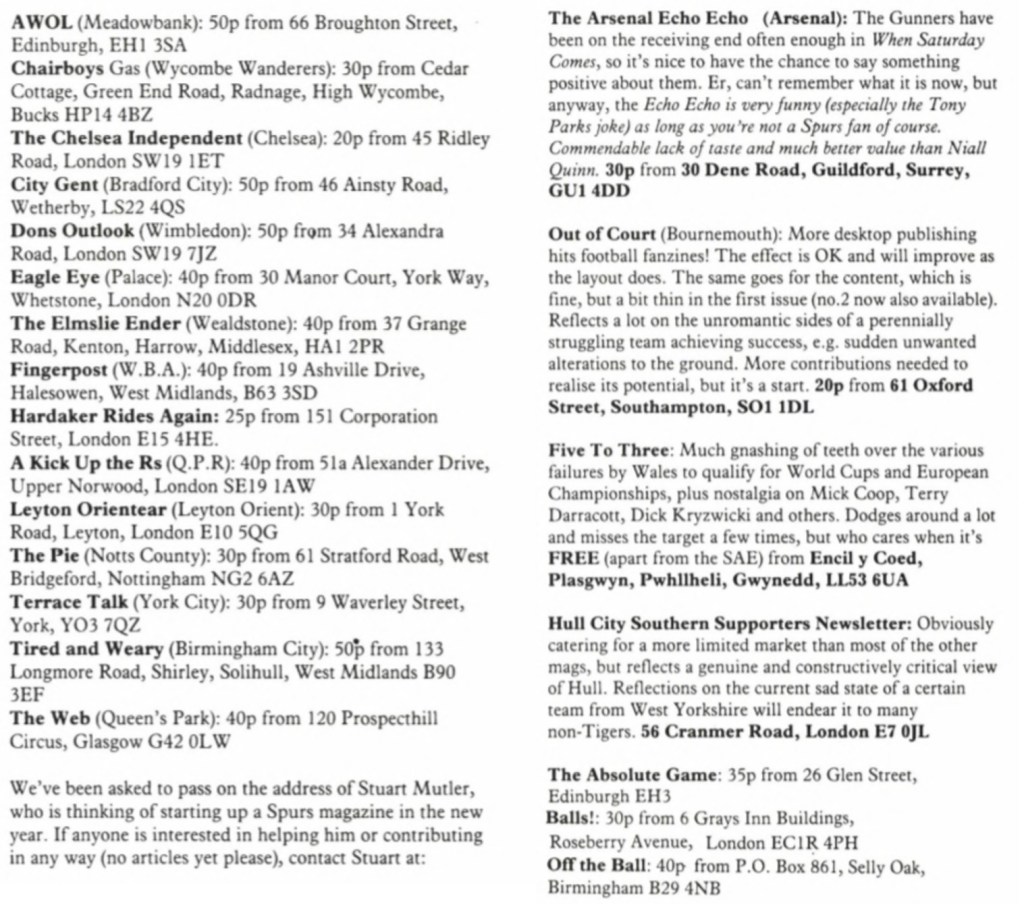
They mention the number of fanzines but as always with people’s memories it’s only the partial truth…by the end of 1997 the WSC list consisted of 22 fanzines with some classic names here. However, our research shows that there were actually just over 100 fanzines already launched by then. Some had obviously been and gone (Foul!, Shamrock and The End for example) We also believe based on our current research that in 1988 the peak of fanzine launches was reached with 121 fanzines appearing that year.
As an aside, Stuart Mutler would go on to create a Spurs fanzine, The Spur and very professional zine which ran for 51 issues until 1994. Mutler later echoed the words of Nigel and how WSC helped change the face of football writing in Britain “In the eyes of the government, police, the majority of the media and general public, football fans were nothing but hooligans. Through the vast majority of people I was meeting, I knew this was not the case. I wanted to redress the balance When Saturday Comes published my appeal for a co-editor in late ’87 The person who I had the most in common with was Matt Stone. While I was working in London, Matt was studying at Warwick. We wrote, phoned and met a few times. Back then there was no email or mobiles”. The first issue of Spur appeared mid 1988, yet another story of editors who had barely met producing a fanzine together.
The Idea and Name
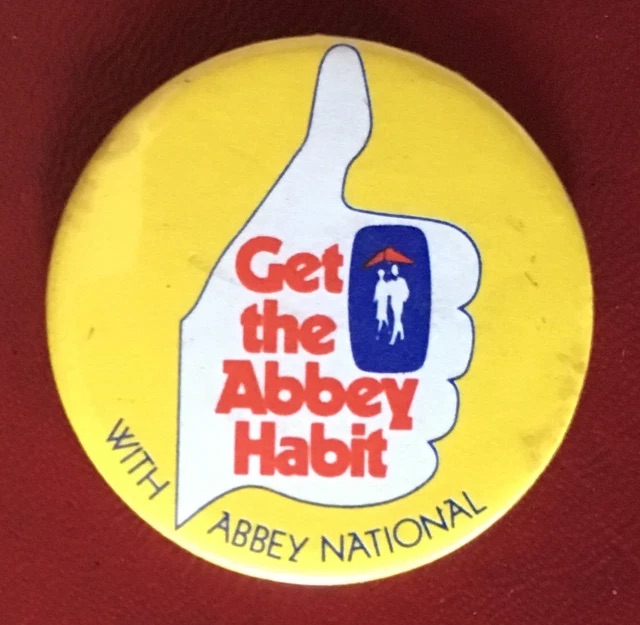
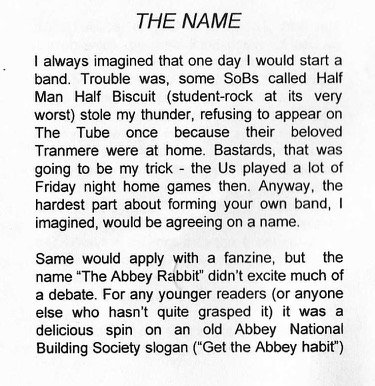
As with the story of the idea, the story of the name is a familiar one, a tremendous pun with a social history reference; readers of a certain age will be unable to stop singing “Get the Abbey Habit, with Abbey National” for the next three weeks. The music cross over to Chas and Dave is also great, not names that appeared in many fanzines. For more great puns why not revisit this blog, it’s rammed full of them. https://footballfanzineculture.blog/2025/07/17/whats-in-a-name/.
There are many more great puns that don’t need a back story, A Touch Far Vetched from Swansea and Colwyn Bay’s Claret and Booze showing Welsh punnery at its finest. Manchester City’s ‘Till I Cry describing the pathos of being a city fan in the 90s perfectly and up in North Yorkshire, Scarborough’s Abandon Chip! was one of the finest.
However, the alternative name “Ian Benjamin couldn’t Score when he was in the Stylistics Either” got me thinking about names I wish I knew the story behind; Far From A Madding Crowd, a Shildon FC fanzine being a great example and one day I’ll track down something about a Plymouth fanzine rumoured to have been called Central Heating, that must be an obscure pun surely?
Logistics
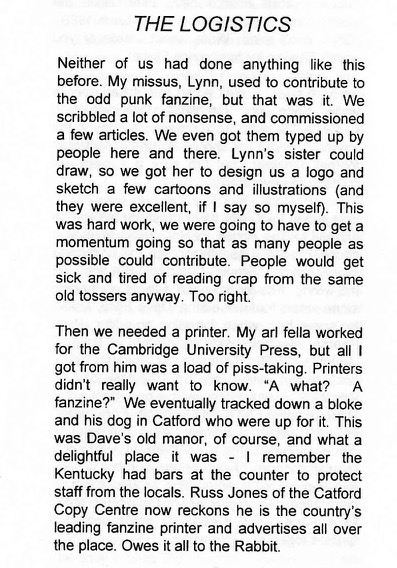
The logistics paragraph will strike a chord with almost every editor that there ever was. It’s arguable that it’s probably easier than ever today to get a fanzine printed so why aren’t there still thousands in existence?! Also, I think Juma in Sheffield would have liked a word about being the “Leading fanzine printer”
The Point
An almost perfect description of why fanzines came into existence. Local papers were generally in the pockets of chairmen or far too busy with leek growing or the comings and goings at the local courts. The refrain from Chairmen “if you print that you won’t be getting a free pass to the press box or get interviews” all too familiar and the clubs themselves had the communication skills of a newborn.
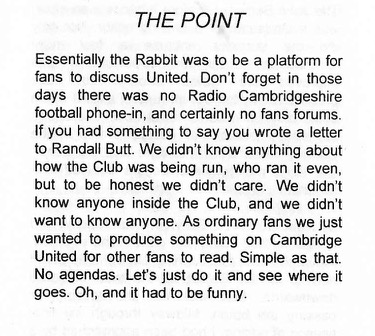
It wasn’t just down the leagues, even the big clubs that didn’t exist in a literal news blackspot were beholden to the press, media departments at clubs consisted of an ex-player being a “Commercial manager” and the Thatcher government was exploiting this nationwide omerta with their poisonous agenda and the help of the national press. Yeah, the 80s was a great decade…
The Good, the Bad, The Ugly
It is worth reading the words concerning the build-up, the big day and the aftermath carefully. This was the blueprint for fanzine launches all over the country.
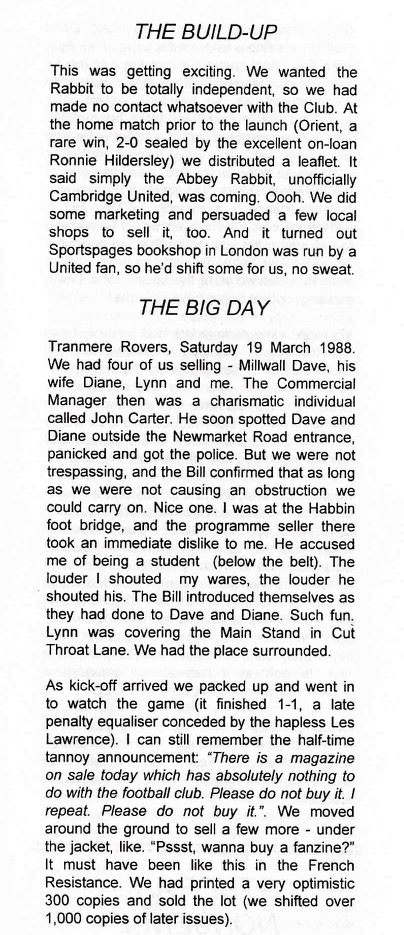
If Brian Rix (one for the teenagers) had written a farce with all the elements of the club’s hysterical, highhanded behaviour and reaction involved it would have been rejected out of hand by the BBC and all the theatres in the land. Forensic examination of a discarded flyer, false accusations, an unfailing belief that the programme was high end literature and a ridiculous compromise…
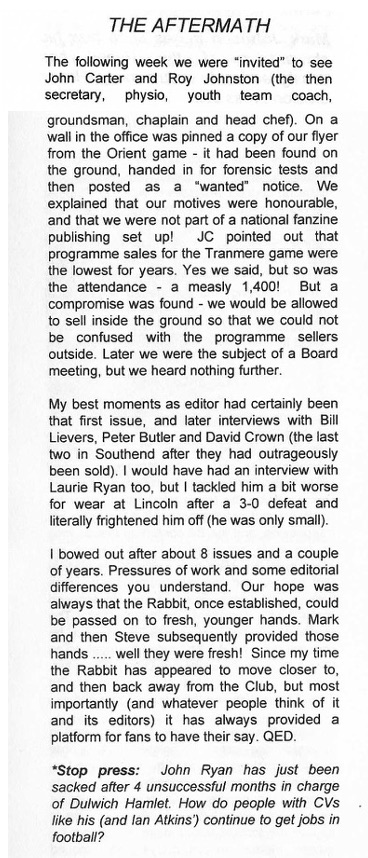
The meeting with Ray Johnson, “the then Secretary, physio, youth team coach, groundsman, chaplain and head chef” is a description I could read over and over again. Lovely stuff.
As often happens with these interviews, the editors’ favourite bits are the chaos and fun had at the beginning and the occasional contact with players. In true fanzine fashion though, half of the interviews were with players who had already left the club, and one was so startled by a ‘refreshed’ fan that he turned down the interview. Again, magnificent.
This sort of treatment of fanzines is something we’ll come back to in another blog but the sad thing is that even 25 years later the same sort of pattern was still repeating itself when Ipswich fanzine Turnstile Blues launched in 2012[1] . A fanzine seller accompanied by his 12- and 8-year-old children was approached by plain clothes officers. “Suffolk Police said they were made aware of the fanzine seller by the club and offered him words of advice”.
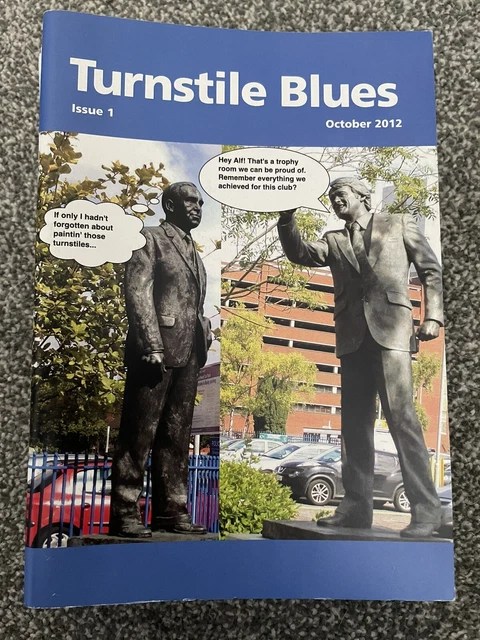
What makes this even more incredible is that there is a picture of two Ipswich stewards laughing at the fanzine and that it was after this that they contacted the police… “Staff at Ipswich Town Football Club spoke with two plain-clothed officers working at the Ipswich v Cardiff match on Saturday, making them aware of a man selling an unofficial fanzine outside the entrance to the club” Christ alive.

Corrections and Clarifications
The inclusion of an ISSN number is rare on fanzines and perhaps indicates that being from the “City of perspiring dreams”, the lads at TAR were aware of copyright acts… Former editors across the country are scratching their heads right now. Fanzines didn’t often conform to the norms of publishing, and there was a reluctance to / ignorance of the need to follow the guidelines of the copyright act 1911 section 15.
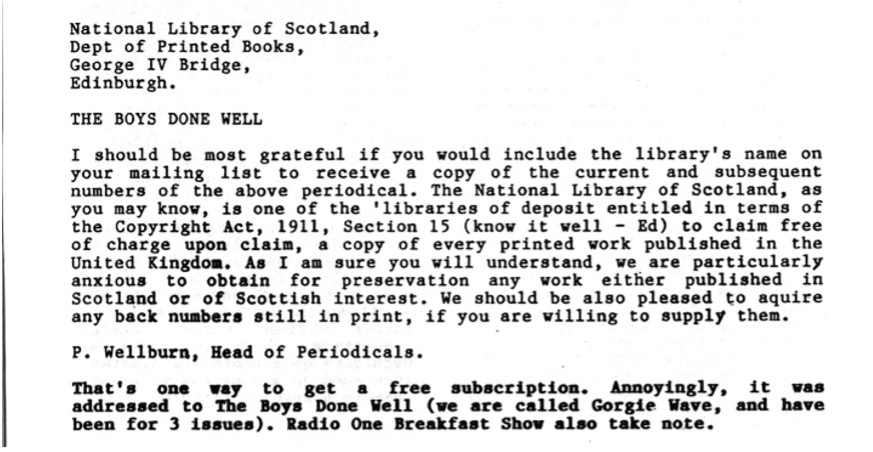
More than one fanzine received letters informing them of their legal requirements and this is my favourite issued from the Dept of Printed Books at the National Library of Scotland, probably by a chap sat at a dusty desk with leather patches on his tweed jacket. In Hearts zine The Gorgie Wave issue 3 the editor takes issue with this obvious scammer trying to get a free copy of their badly printed, narrow focussed pamphlet. To make it worse he gets their name wrong, perhaps the first time the Head of Periodicals at the National Library of Scotland had something in common with Radio 1. FYI current editors this requirement is still in place today..
HOWEVER, though The Abbey Rabbit IS well stocked in the British Library and issue 50 has a good date and issue identifier, without wishing to get into geek country here, the ISSN on issue 50 (1355-1906) is different to the ISSN on other issues of TAR and the one used in the British Library (1355-9605). A simple mistake? Well, nothing is ever simple with fanzines, despite the cover boasting this as being the 10th anniversary special 50th issue, the inside pages are all adorned with the header stating Issue 49. Majestic.

The Final Whistle
Nothing really changes, does it? Well yes, obviously it does but common themes recur. Thatcher is long gone and yet we still have idiots and psychopaths in charge of the country and football clubs. “There is a magazine on sale today which has absolutely nothing to do with the football club” as a tannoy announcementis probably the best sales pitch a fanzine could ever wish for.
Here we have what was a great fanzine, fondly remembered by everyone who came across it, besides perhaps the Secretary, physio, youth team coach, groundsman, chaplain and head chef of Cambridge United. But scratch the surface and a celebration of 10 years at the coal face is strewn with stories half remembered, panic, chaos and confusion at a football club and might have been written today. Plus of course the fanzine itself has some minor errors!
I love looking at this stuff and I hope you enjoy it too. Join us next time when we’ll look at ..well, whatever comes across my desk this week.

 Football Fanzine Culture
Leave a comment